

How to Manage Certificates of Deposit (CDs) During Retirement

Smart, Steady, & Stress Free Savings
CDs can play a helpful role in your retirement plan by offering steady, low-risk growth. With the right approach, they can generate reliable income while helping protect your savings.
What are CDs?
A Certificate of Deposit, often called a CD, is a type of savings account that holds a fixed amount of money for a set period, like 6 months, 1 year, or even longer. In return, the financial institution pays you interest, usually at a higher rate than a regular savings account.
The catch? You agree not to touch the money until the CD reaches its maturity date. If you withdraw early, you might pay a penalty.
Because of their fixed rates and low risk, CDs are a popular way to earn predictable returns, especially for people who want a safe place to park their savings.
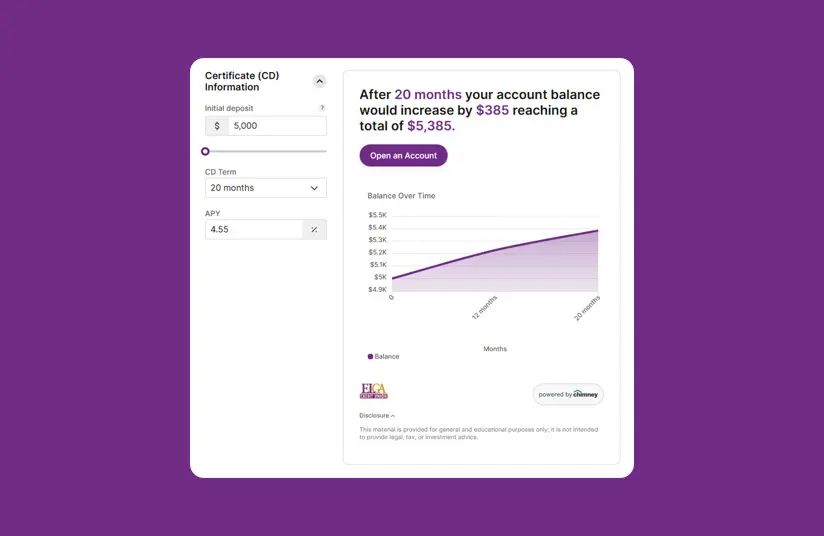
To find out how much you could earn with a CD, try our easy to use CD Calculator.
Why CDs can work well in retirement
CDs are a saving tool that typically earn higher interest than standard savings accounts. Because they come with federal insurance, up to the allowed limits, they offer a safe way to grow your money. Their fixed interest rates make them especially appealing for retirees who want stable, predictable earnings without exposure to market volatility.Quick Tips to manage CDs in retirement
- Build a CD Ladder for Flexibility and Better Rates A CD ladder involves splitting your savings into several CDs with different maturity dates—such as 1, 2, and 3 years. As each one matures, you can decide whether to use the funds or roll them into a new CD. This strategy helps you access cash at regular intervals while still taking advantage of higher rates on longer-term CDs.
- Choose Terms Based on When You’ll Need the Money Think about your upcoming expenses and pick CD lengths that match. Shorter terms work well for near-future needs, while longer-term CDs can lock in better rates for money you won’t touch right away.
- Look Into Tax-Deferred Accounts Placing CDs in tax-advantaged accounts like an IRA can be a smart move. You won’t pay taxes on the interest until you withdraw the funds, which can help your money grow more efficiently over time. For information on the IRAs ELGA Credit Union offers and current rates click HERE.
- Keep Tabs on Inflation and Interest Trends While CDs are safe, their fixed returns don’t adjust for inflation. If inflation rises, your earnings might not go as far. Reviewing your CD strategy periodically can help you stay ahead of changing economic conditions.

Things to Watch Out For
Even though CDs are low risk, there are still a couple of drawbacks to consider:
- Early Withdrawal Fees: Taking your money out before the CD matures usually comes with a penalty, which can eat into your interest.
- Inflation: If the cost of living increases faster than your CD earnings, the real value of your savings could decrease over time.
Final Thoughts
CDs can offer peace of mind and consistency in retirement. With thoughtful planning, like using laddering strategies and selecting terms that match your needs, you can make the most of this dependable savings’ option.
